New Location

You can find all the old content and new stuff too at worldplatterblog.wordpress.com
Showing posts with label meatless Monday. Show all posts

Monday, March 21, 2016

Eggplant with Mushroom-Yogurt Stuffing


This is a delicious meatless entreé for 4 or a side dish for 8. The mushrooms give it a meaty texture and flavor. It's very hearty for a vegetarian dish, especially one that doesn't include any cheese.

I like to spray the bread crumb topping with non-stick cooking spray. It helps the crumbs brown up nicely while adding very little fat. If you want a richer, crispier topping, you can combine the crumbs with 2 Tablespoons melted butter before spreading them onto the eggplant.

You can stuff the eggplants ahead of time and bake them later. You'll need to bake them a bit longer to make sure the center is piping hot, however.

Eggplant with Mushroom-Yogurt Stuffing
(serves 4 as an entreé or 8 as a side dish)

2 large eggplants, 1 to 1¼ pound each, cut in half lengthwise
4 scallions, white and green tops, chopped
½ pound coarsely chopped mushrooms
1 medium carrot, grated
½ teaspoon dried thyme
4 Tablespoons butter
3 Tablespoons flour
¾ to 1 cup Greek low-fat or full-fat unflavored yogurt
1½ teaspoon salt
½ teaspoon black pepper
½ cup panko bread crumbs
non-stick cooking spray

Spray a 9"x5" baking dish with non-stick cooking spray.

Bring a couple of inches of water to a boil in a large pot with a steamer basket. Place the eggplant halves in the steamer and cook until tender, about 20 minutes. Remove from the steamer and allow to cool until you can handle them. Remove the pulp, being careful not to tear the skin. Chop the pulp coarsely, season with ¼ teaspoon salt and set aside. Place the eggplant shells in the baking dish and season them with ¼ teaspoon salt.

Preheat the oven to 350°F.

Melt the butter in a large skillet over medium-high heat. Add the scallions, mushrooms, and carrots. Sauté for 5 minutes until carrots are limp and the mushrooms have started to lose their liquid. Lower heat to low. Sprinkle with the flour and cook for another minute. Stir in the yogurt and chopped eggplant. Season with the rest of the salt and pepper. Taste for seasonings and add more salt if needed.

Fill each eggplant half with ¼ of the filling. Sprinkle 2 Tablespoons panko crumbs on each eggplant half. Moisten with a generous dose of non-stick cooking spray. Bake for 25-30 minutes until crumbs are browned and filling is very hot.

Adapted from The Good Cook: Vegetables, Time-Life Books, 1979.

Monday, November 30, 2015

Red Lentil and Squash Curry


Meatless Monday again! Today, I'll give you an important tip for up'ing the flavor in many meatless dishes. It's a good tip for many dishes, actually. It's extra-important in vegetarian food.

Brown your onions! It adds such depth of flavor. It's a common technique in Indian food, meatless or not. Experiment with dishes containing bold spices. I bet they are even better with browned onions.

Red lentils cook up pretty quickly. They turn yellow when cooked and have a smooth texture compared to brown lentils. Red lentils have become easy to find. I found them in all the major supermarkets in town. Usually, they are in the bulk section. You can also get them in Indian markets. Many supermarket produce sections now sell prepped butternut squash. Butternut squash can be a bear to peel and cut up, so this is a boon for squash lovers who find the peeling/cutting up daunting.

Red Lentil and Squash Curry
(serves 4-6)

1 cup dried red lentils, rinsed
3 cups water
½ teaspoon salt
2 Tablespoons vegetable oil
1 large onion, chopped
4 cloves garlic, minced
1 Tablespoon grated fresh ginger
½ teaspoon ground cumin
½ teaspoon ground coriander
½ teaspoon ground turmeric
pinch of cayenne pepper
¼ teaspoon black pepper
2 cups butternut squash, peeled and cut into 1" cubes
½ cup - ¾ cup low sodium vegetable stock
1 teaspoon salt (less if your stock is salty)

Combine red lentils, water, and ½ teaspoon salt in a medium saucepan. Bring to a boil, lower heat to maintain a simmer, and partially cover. Cook until tender and nearly all the water is absorbed, about 30-40 minutes.

Heat the vegetable oil in a large skillet over medium heat. Add the onion and cook until nicely browned, about 15 minutes. As the onions brown, you may have to reduce the heat to assure they don't burn. Stir often for even browning.

Add the garlic, ginger, cumin, coriander, turmeric, cayenne, and black pepper. Cook, stirring, for about a minute until the spices are fragrant. Add the squash, ½ cup vegetable stock, and 1 teaspoon salt. Stir to combine. Cover and simmer for 15-20 minutes until the squash is tender. If the moisture cooks away, add the last ¼ cup stock. When the squash is cooked, add the lentils and any cooking liquid. Stir to combine. Check for salt. Serve over hot rice.

Adapted from a recipe in Kitchen Garden magazine, Dec. 1996/Jan. 1997.

Monday, November 23, 2015

My 2 cents on soaking or not soaking beans and a bean soup recipe


There's an article up on Food52 that presents both sides of the bean argument. That argument being should you soak your beans before cooking or should you go straight to cooking?

I've done it both ways. Sometimes I use the fast soak method. I've cooked them from dried too. Now that I have a modern electric pressure cooker, I almost always cook beans from dried under pressure. It is the quickest way to tasty beans. You can cook chickpeas from dried in under an hour.

I do think the soak then cook method does cut down on the gasiness of beans. There are long-chain carbohydrates in beans that dissolve into the soaking water. If you throw away the soaking liquid, you've reduced the amount of these indigestible (to us anyway; gut bacteria gobble them up, releasing a number of volatile organic compounds) starches.

The biggest reason beans are blah-tasting, no matter which way you cook them, is you didn't add enough (or any) salt when you cooked them. You will find many chefs who say "Don't ever salt your beans before they are nearly completely cooked. They won't cook if you add salt." To this I say  "Have you actually tried it?" Because, I have, and I find that salt does not slow down the cooking. I live in a place where beans cook more slowly anyway (water boils here in Boulder at 204°F - about 8°F lower than sea level) so I have no desire to slow down the cooking. It takes a long time already! My experiments show that adding salt at the beginning doesn't slow down cooking. And it definitely makes your beans taste better than if you wait until the end to season them with salt.

Here's a bean soup recipe where the salt goes in at the beginning, as well as a chunk of Parmigiano-Reggiano rind. The beans aren't soaked first, though you could start with soaked beans. [You'll be able to cut down on the cooking time by about half. You should reduce the cooking water down to 6 cups.] They are cooked with the seasonings until nearly done. The soup is finished with some fresh veggies that need only a short time to cook. It's a hearty soup with plenty of umami from the Parmigiano-Reggiano. I recommend that you always toss the rinds in the freezer so you can add them to soup, this one or this one with chickpeas.


Tuscan Bean and Swiss Chard Soup
(serves 6)

1 pound (2 cups) Great Northern, navy, or cannellini beans, picked over and rinsed
3 Tablespoons olive oil
1 large onion, chopped
4 cloves garlic, minced
8 cups water
3" x 4" piece of Parmigiano-Reggiano rind
2 bay leaves
½ teaspoon black pepper
1 ½ teaspoon salt
4 cups low-sodium stock (either vegetable or chicken)
1 fennel bulb, stalks discarded, cored and coarsely chopped
½ pound Swiss chard leaves, washed and coarsely chopped

Heat the oil over medium heat in a soup pot. Add the onion, and cook until translucent, about 5 minutes. Add garlic, cook another minute. Add beans, 8 cups of water, rind, bay leaves, black pepper, and salt. Bring to a boil, reduce to a simmer, and cook for about 1 ½ hours until beans are tender. The time is variable - depends on your altitude (will cook quicker at sea level) and the age of your beans (old beans can take a very long time to cook). Test at an hour and see how its doing.

Once the beans are tender, add in the stock, fennel, and Swiss chard. Cook until fennel is tender, about 10 minutes. Fish out the cheese rind and chop. Add back to the soup. If the rind fell apart on its own, no worries. The rind is totally edible and it adds great flavor and texture to the soup.

Adapted from a recipe in Gourmet January 2004.

Tuesday, November 17, 2015

Kohlrabi with Tofu and Dried Shiitake Mushrooms


Kohlrabi is an uncommon vegetable. My research puts it mostly in the turnip sphere and treats it thusly: saturate in butter and/or cream. That's a very European view of this vegetable. Kohlrabi is also popular in India and China, though you wouldn't know it looking through most vegetable cookbooks.

A kohlrabi along with some Kashmiri saag (probably mustard greens)
I'm here to fix that. Kohlrabi does not need to be cooked to death, then puréed, and finally bathed in butter and cream. It's quite delicious lightly cooked. In texture and flavor, it is similar to broccoli stems, which you could use instead of kohlrabi in this recipe. It has great crunch. It isn't overly cruciferous in flavor. Perfect for a stir fry.

This is a mild flavored dish with a play of textures: crunchy from the kohlrabi, chewy from the mushrooms, and soft from the tofu.

Kohlrabi with Tofu and Dried Shiitake Mushrooms
(serves 6)

8-10 large dried black mushrooms (shiitake)
1 ½ pounds kohlrabi
2 scallions
1 teaspoon cornstarch
1 Tablespoon Chinese rice wine or dry sherry
¼ teaspoon black pepper
1 ½ teaspoons salt
¼ teaspoon sugar
1 teaspoon Asian roasted sesame oil
3 Tablespoons vegetable oil
1 Tablespoon minced ginger
14-16 oz. tofu, cut into cubes

Soak the black mushrooms in about 2 cups boiling water for at least 30 minutes.

Peel the kohlrabi and cut into thick julienne, like thin French fries. Cut the scallions into 3" lengths, then slice thinly lengthwise. Set aside.

Remove the mushrooms from the water, cut off the woody stems, and slice the caps. Pour off ½ cup of the soaking liquid, being careful to leave the bits at the bottom of the bowl in the bowl.  Mix 4 Tablespoons of the soaking liquid with the cornstarch, rice wine, black pepper, ½ teaspoon salt, sugar, and sesame oil. Set aside. Add ½ teaspoon salt to the remaining ¼ cup of the soaking liquid and set aside.

Heat up oil in a wok or large skillet until nearly smoking. Add the ginger and stir until fragrant, about 10 seconds. Add the kohlrabi, scallions, and mushrooms. Stir fry for one minute. Stir soaking liquid with just the salt added and add to wok. Reduce heat to medium and cook, covered for 4 minutes.

Add the tofu, but do not stir, and sprinkle with remaining ½ teaspoon salt. Cover and cook for 3 minutes. Stir the mix of soaking liquid, etc. to redissolve the cornstarch. Pour over everything. Stir lightly. Bring liquid to a boil to thicken sauce; there isn't a lot of sauce. Serve immediately over rice.

Photo: By Tarunpant (Own work) [CC BY-SA 3.0 (http://creativecommons.org/licenses/by-sa/3.0)], via Wikimedia Commons

Monday, November 9, 2015

Meatless Monday: Egg Curry

This recipe comes from a wonderful Indian cookbook called 5 Spices, 50 Dishes. The five spices are cumin, coriander, turmeric, cayenne, and black mustard seeds. They are the basis for a lot of delicious Indian recipes. This recipe uses four out of the five spices and they are all easy to find in any supermarket.

Onion and Yogurt Egg Curry
(serves 4)

4 Tablespoons vegetable oil
1 medium to large onion, minced
2 teaspoons ground coriander
1 Tablespoon grated ginger
2 cloves garlic, minced
1 teaspoon ground cumin
1 teaspoon ground turmeric
¼ - ½ teaspoon cayenne (it will be pretty darn hot with ½ teaspoon)
1 cup low-fat yogurt, whisked to break up lumps
1 cup water
1 teaspoon kosher salt
¼ teaspoon sugar
non-stick cooking spray
8 hard-boiled eggs, peeled and halved the long way

Heat the oil in a large skillet over medium heat. Add the onion and sauté until the onions are dark brown. This will take a while, about 15-20 minutes. You may need to reduce the heat to medium-low to keep the onions from burning. Add the coriander, ginger, garlic, cumin, turmeric, and cayenne. Cook for a few minutes, stirring often to keep the spices from burning. Turn the heat to low. Whisk the yogurt into onions and simmer for 5 minutes. Stir in the water, salt, and sugar. Continue simmering the sauce while you fry the eggs.

Spray a large skillet, preferably non-stick, with cooking spray. Fry the egg halves, yolk side down until they start to brown. This helps to seal the yolk to the white so the eggs don't break apart in the sauce. Carefully place the eggs in the sauce and cook for a couple of minutes. Serve with hot naan or rice.

Recipe adapted from 5 Spices, 50 Dishes by Ruta Kahate, Chronicle Books, 2007.

Monday, October 12, 2015

Lentil-Mushroom Soup

What a pretty basket of mushrooms!
Here's something warming for fall. Though most people don't think of mushrooms as a fall product, it's when many mushrooms varieties show up in the forest. Porcini (called Cepes in French, Steinpilz in German, Boletus edulis in Science) are my favorite fall fungi, though in our Colorado mountains, they show up after good rains all summer long. You don't need fresh porcini for this soup - good thing, as they are not available in most places and they cost $30-50/pound when you can find them. Dried porcini are not inexpensive, but a little goes a long way. You need 1 oz. to make a big, rich, flavorful soup. Add some fresh mushrooms at the end for even more umami. You can use whatever kind you can find in the supermarket: button, cremini (baby Portobellos), oyster, or if you are feeling flush, some fresh porcini.

This soup is hearty enough for a simple dinner. Serve it with some crusty bread and a big salad.

Lentil-Mushroom Soup
(serves 4-6)

1 oz. dried porcini mushrooms
1 cup brown lentils, rinsed
2 stalks of celery, cut into small dice
½ medium red onion, cut into small dice
⅔ cup passata (see Note)
2 bay leaves
¾ - 1 teaspoon salt
¼ cup olive oil
2 cloves garlic, sliced
1 pinch crushed red pepper flakes
½ pound sliced fresh mushrooms
¼ teaspoon black pepper

Soak the dried mushrooms in 2 cups of hot water, until rehydrated, about 30 minutes. Remove the mushrooms and pour the soaking water through some cheesecloth to strain. Reserve the water for the soup. Chop the porcini and put in a soup pot with the lentils, celery, red onion, passata, bay leaves, and ½ teaspoon salt. Combine the mushroom soaking water with cold water to make a total of 6 cups and add to the pot. Bring to a boil over medium-high heat. Reduce heat to medium-low to maintain a simmer. Cook for about 45 minutes, until the lentils are tender.

Heat the olive oil in a medium skillet. Add garlic, red pepper flakes, and mushrooms. Cook for 10 minutes until the mushrooms and garlic are lightly browned. Add to the soup along with the black pepper. Taste for salt and serve.

When reheating the soup, add a bit of water because it will thicken up when chilled.

Note: Passata is Italian tomato puree. Unlike American canned tomato puree, it is not cooked, so it tastes fresher. I like Mutti brand which is sold in bottles. You can find it at World Marketplace stores. Pomi brand is another good one. It's sold in cartons and is available in supermarkets.

Adapted from Fagioli: The Bean Cuisine of Italy by Judith Barrett, Rodale, 2004.

Photo: By George Chernilevsky (Own work) [Public domain], via Wikimedia Commons

Monday, September 21, 2015

Stir-fried Vegetables and Tofu with Soba Noodles


This is an Asian mash-up. Lemongrass from Thailand, hoisin sauce from China, soba noodles from Japan. You, my dear reader, may be into authenticity but I am not. I look in my fridge, think about other things I've had or seen in recipes, and run with it. I don't believe in overly constraining this cooking thing, especially when I'm trying to clear a bunch of odds and ends out of the fridge.

Though you can use firm tofu straight out of the package, I prefer to use tofu that has been frozen and thawed. Freezing tofu changes its texture, and I like it better then fresh tofu in stir-fries.

For important tips on stir frying, check out this article.

Stir-fried Vegetables and Tofu with Soba Noodles
(serves 4-6)

1 oz. dried shiitake mushrooms
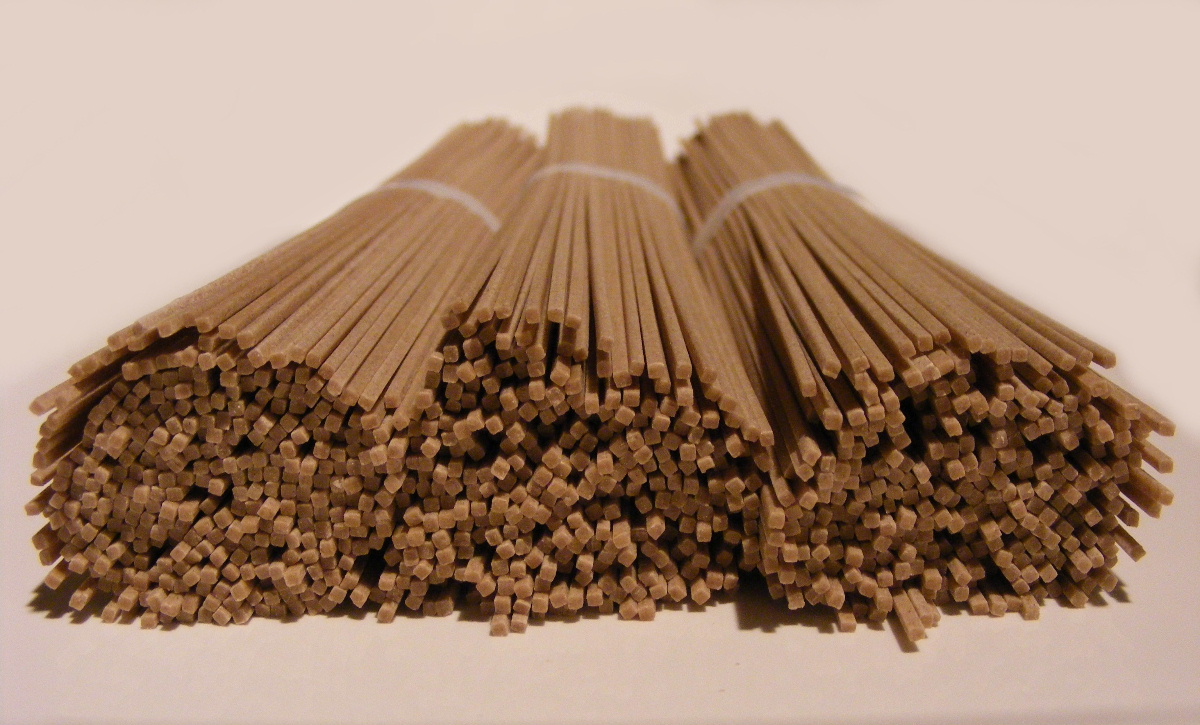
10 oz. soba (Japanese buckwheat) noodles
12 oz. firm tofu (preferably frozen and thawed), cut into 1" cubes
4 Tablespoons vegetable oil (peanut and sunflower are my favorites)
3 large cloves garlic, minced
6 scallions, cut into 1" pieces
¼ teaspoon dried lemongrass
1 large carrot, cut in half lengthwise, and thinly sliced
2 large plum tomatoes, cubed
3 cups snow peas or green beans
6 Tablespoons hoisin sauce
3 Tablespoons low-sodium soy sauce
1 teaspoon cornstarch dissolved in 1 Tablespoon cold water
½ teaspoon black pepper

Before you begin slicing and dicing, rehydrate the dried mushrooms: Cover the mushrooms with boiling water and let sit as you do the prep on all the veggies. When the mushrooms are rehydrated, remove the tough stem and slice the caps.

If using green beans, cut into 1" pieces.

Dry off the tofu, gently pressing out the moisture.

Bring a large pot of salted water to a boil for the noodles.

Heat 2 Tablespoons of oil in a large skillet or wok over high heat. Stir fry the tofu until lightly golden. Remove from wok with a slotted spoon and set aside.

Add the remaining oil to the wok. Add the scallions and dried lemongrass. Cook until garlic is fragrant. Add sliced carrot. Stir fry for about 3 minutes. Add snow peas/green beans. Continue cooking for another 4 minutes, stirring frequently. While the beans are cooking, get the noodles in the boiling water. They take about 4 minutes to cook. Do not overcook.

Drain the noodles in a strainer and set aside. Add the hoisin sauce and soy sauce to the veggies. Stir to combine. Add in the fried tofu and the noodles. Toss to combine. Make a well in the center to expose the liquid at the bottom of the wok. Add the slurry of cornstarch and bring to a boil, stirring. This will thicken the sauce slightly, helping it to stick to the noodles. Season generously with black pepper and serve hot.

Good as a leftover though the noodles will have a softer texture after reheating.

Photo credit: By FotoosVanRobin (Flickr) [CC BY-SA 2.0 (http://creativecommons.org/licenses/by-sa/2.0)], via Wikimedia Commons

Tuesday, April 14, 2015

Dal: Red Lentils with Bengali Spices

My breakfast: dal and fresh whole wheat tortilla chips
I am a huge fan of Indian food. All regions, vegetarian, not vegetarian. Doesn't matter. The spices in Indian food are sensually lush and totally addicting. The downsides of cooking Indian food are a) you need a lot of uncommon (to Americans) ingredients, and b) it's time-consuming. But, when I do it from scratch (rather than run down the street for Indian take-out), it's so so satisfying.


Dal means beans and vegetarian cooking in India is about richly spiced beans. Most people are familiar with lentil dal because it is served alongside the rice at many Indian restaurants. This recipe uses red lentils though you can substitute yellow split peas. Red lentils are smaller and more delicate than typical brown lentils. They do not cook up red - they cook up golden. They are bland on their own, soaking up Indian spices. They also cook down smooth so the dal is like a thick porridge. Serve as a thick soup, a side dish, or over rice as a main dish. It will thicken in the fridge but the flavors only get better.

Bengal Red Lentils with Spices
(serves 4-6)

Dal
1 ½ cups red lentils, rinsed and picked over
1 hot green chile, such as a small Thai chile or serrano, stemmed
½ teaspoons ground turmeric
4 ½ cups water
1 teaspoon kosher salt

Onion/Tomato
1 small onion, minced
¾ cup diced peeled tomatoes (canned is fine)
1 Tablespoon grated fresh ginger
2 Tablespoons vegetable oil

Spiced Oil
1 ½ Tablespoons vegetable oil
½ teaspoon whole cumin seeds
½ teaspoon whole fennel seeds
½ teaspoon whole black mustard seeds
½ teaspoon black onion (kalonji or kalaunji) seeds
½ teaspoon fenugreek seeds (or same amount ground)
2 bay leaves
1 Chinese dried hot red chile pepper, stemmed

To cook lentils, place all dal ingredients in a large pot. Bring to a boil, stirring occasionally to prevent clumping and sticking to the bottom of the pot. Once it reaches a boil, turn down to medium-low and partially cover. Cook for 25 minutes.

While lentils are cooking, heat up the oil in a large skillet over medium-high heat. Add onions and cook, stirring often. When the onions start to brown, turn down heat to medium-low. Continue cooking until onions are toasty brown. Add tomatoes and ginger. Cook for a few minutes. Remove from heat. When the dal timer goes off, add this to the dal and mix in. Set the timer for another 10 minutes.

Heat oil in a small skillet. Add all the remaining ingredients and fry the spices until they are fragrant and the chile and bay leaves start to brown. Remove chile and bay leaves. Add seeds and oil to the dal when timer goes off. Check seasoning; add more salt if necessary. Serve hot.

Recipe can be doubled. Leftovers freeze well.

Recipe adapted from Classic Indian Vegetarian and Grain Cooking by Julie Sahni, William Morrow and Company, Inc., 1985.

Photo of Red Lentils: By Sudeshna Banerjee (Own work) [CC BY-SA 3.0 (http://creativecommons.org/licenses/by-sa/3.0)], via Wikimedia Commons

Monday, January 26, 2015

Meatless Monday: Italian Lentils and Polenta

Leftovers! Polenta reheated by panfrying
This is stick to your ribs wintertime comfort food, vegetarian style. Check the end of the recipe for the best way to reheat the polenta if you have some leftovers. Or, make this ahead so you can use the polenta reheating tip to make this dish even better.

Italian Lentils and Polenta
(serves 6)

Lentils
2 Tablespoons olive oil
2 roasted red peppers, diced
4 cloves garlic, minced
1 teaspoon fennel seeds
¼ dried red chile flakes
1 ½ cups lentils
2 ⅔ cups stock
⅓ cup white wine
¼ teaspoon salt
¼ teaspoon black pepper
1 Tablespoon balsamic vinegar
½ onion, diced

Polenta
6 cups stock
salt if your stock is unsalted
1 ½ cups yellow cornmeal or corn grits

¼ cup grated Parmesan cheese, for garnish

Heat up oil in a medium saucepan over medium heat. Add the peppers, garlic, fennel seeds, and chile flakes. Cook for 5 minutes. Add  lentils, stock, wine, salt, pepper, and vinegar. Bring to a boil, reduce to a simmer, and cook for 15 minutes. Raise the heat to medium high and cook until lentils are tender and most of the liquid has evaporated. Remove from the heat and stir in onion. Cover and set aside while you cook the polenta.

In a large pot, heat up the stock over medium-high heat. Whisk in the cornmeal slowly. Switch to a large heavy spoon, reduce the heat to medium-low and stir every few minutes. The polenta is done when it is very thick, thick enough so that stirring it is work. Taste for salt and add some if the polenta is bland. Spoon polenta into bowls and cover with lentils. Garnish each serving with 1 Tablespoon grated Parmesan cheese.

You can reheat polenta in the microwave but the best way to reheat it is by panfrying it. You need a non-stick skillet and a couple of teaspoons of oil per serving. To facilitate future panfrying, spread it out on a rimmed baking pan in a 1" layer right after you cook it then refrigerate until firm. Heat the oil in the skillet then fry the polenta until lightly browned all over. The outside will be a little crunchy-crispy and the inside will be delicious creamy. Absolutely the best way to reheat polenta.

Adapted from a recipe in The Best 125 Meatless Italian Dishes by Susann Geiskopf-Hadler and Mindy Toomay, Prima Publishing, 1995.

Followers