New Location

You can find all the old content and new stuff too at worldplatterblog.wordpress.com
Showing posts with label chard. Show all posts

Monday, November 23, 2015

My 2 cents on soaking or not soaking beans and a bean soup recipe


There's an article up on Food52 that presents both sides of the bean argument. That argument being should you soak your beans before cooking or should you go straight to cooking?

I've done it both ways. Sometimes I use the fast soak method. I've cooked them from dried too. Now that I have a modern electric pressure cooker, I almost always cook beans from dried under pressure. It is the quickest way to tasty beans. You can cook chickpeas from dried in under an hour.

I do think the soak then cook method does cut down on the gasiness of beans. There are long-chain carbohydrates in beans that dissolve into the soaking water. If you throw away the soaking liquid, you've reduced the amount of these indigestible (to us anyway; gut bacteria gobble them up, releasing a number of volatile organic compounds) starches.

The biggest reason beans are blah-tasting, no matter which way you cook them, is you didn't add enough (or any) salt when you cooked them. You will find many chefs who say "Don't ever salt your beans before they are nearly completely cooked. They won't cook if you add salt." To this I say  "Have you actually tried it?" Because, I have, and I find that salt does not slow down the cooking. I live in a place where beans cook more slowly anyway (water boils here in Boulder at 204°F - about 8°F lower than sea level) so I have no desire to slow down the cooking. It takes a long time already! My experiments show that adding salt at the beginning doesn't slow down cooking. And it definitely makes your beans taste better than if you wait until the end to season them with salt.

Here's a bean soup recipe where the salt goes in at the beginning, as well as a chunk of Parmigiano-Reggiano rind. The beans aren't soaked first, though you could start with soaked beans. [You'll be able to cut down on the cooking time by about half. You should reduce the cooking water down to 6 cups.] They are cooked with the seasonings until nearly done. The soup is finished with some fresh veggies that need only a short time to cook. It's a hearty soup with plenty of umami from the Parmigiano-Reggiano. I recommend that you always toss the rinds in the freezer so you can add them to soup, this one or this one with chickpeas.


Tuscan Bean and Swiss Chard Soup
(serves 6)

1 pound (2 cups) Great Northern, navy, or cannellini beans, picked over and rinsed
3 Tablespoons olive oil
1 large onion, chopped
4 cloves garlic, minced
8 cups water
3" x 4" piece of Parmigiano-Reggiano rind
2 bay leaves
½ teaspoon black pepper
1 ½ teaspoon salt
4 cups low-sodium stock (either vegetable or chicken)
1 fennel bulb, stalks discarded, cored and coarsely chopped
½ pound Swiss chard leaves, washed and coarsely chopped

Heat the oil over medium heat in a soup pot. Add the onion, and cook until translucent, about 5 minutes. Add garlic, cook another minute. Add beans, 8 cups of water, rind, bay leaves, black pepper, and salt. Bring to a boil, reduce to a simmer, and cook for about 1 ½ hours until beans are tender. The time is variable - depends on your altitude (will cook quicker at sea level) and the age of your beans (old beans can take a very long time to cook). Test at an hour and see how its doing.

Once the beans are tender, add in the stock, fennel, and Swiss chard. Cook until fennel is tender, about 10 minutes. Fish out the cheese rind and chop. Add back to the soup. If the rind fell apart on its own, no worries. The rind is totally edible and it adds great flavor and texture to the soup.

Adapted from a recipe in Gourmet January 2004.

Friday, November 8, 2013

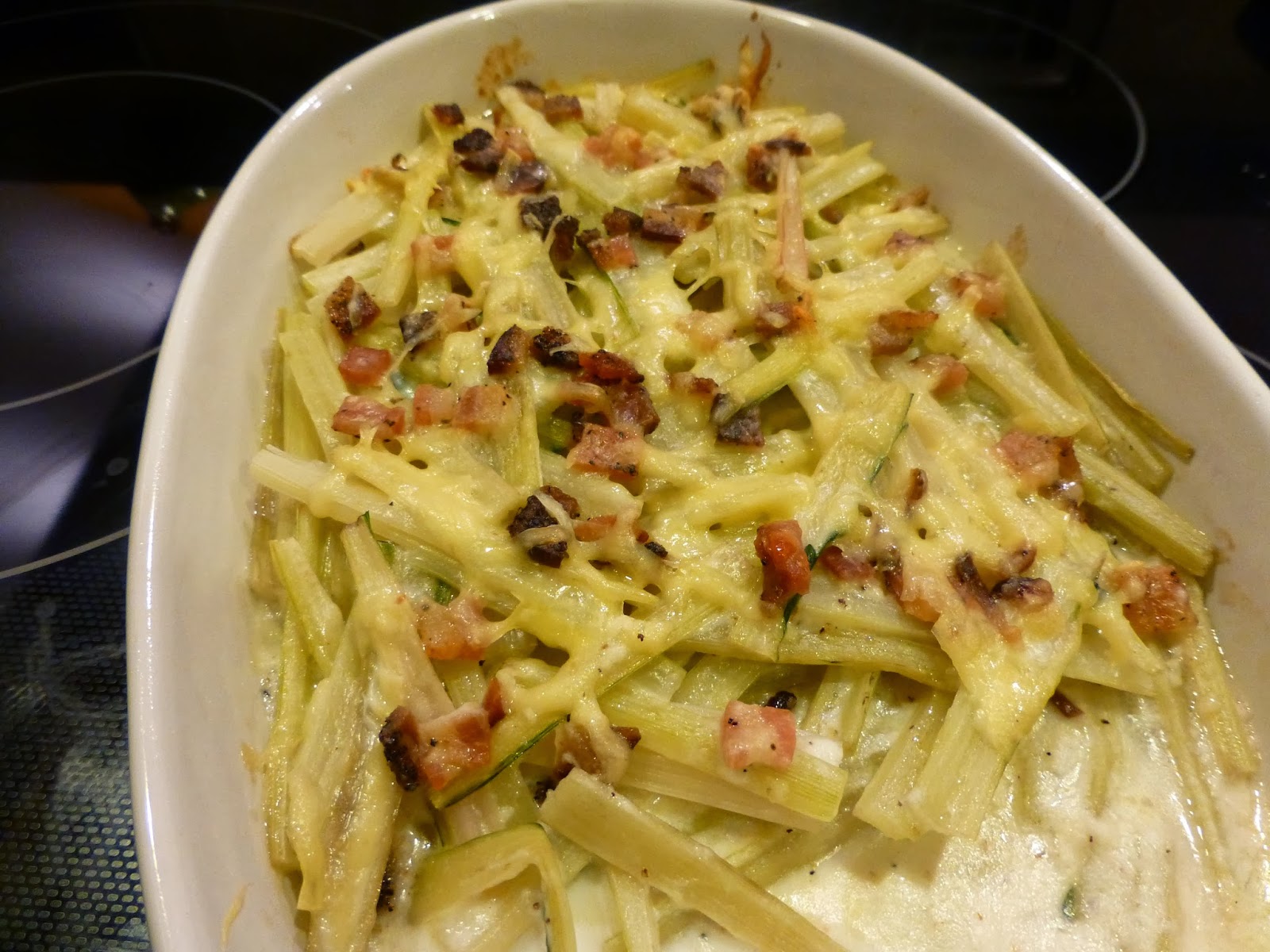
Chard Stem Gratin


We're coming up on the end of chard season here in Colorado, at least in my sun-deprived garden. I picked it all this week because a) it's not going to grow anymore (that lack of direct sun thing), and b) it's getting below 20°F at night, which is cold enough to damage the leaves.

What does one do with all that chard? I picked about 1 pound of leaves and 2 pounds of stems. I usually separate the leaves from the big stems because the stems take much longer to cook. I will blanch and freeze a bunch (my husband and I can only eat so much chard). The rest went into this gratin.

A gratin is a baked dish, usually enriched with milk or cream, though you don't have to make them creamy and cheesy. I posted a non-milk based potato gratin; it contained only a small amount of cheese. The cooking liquid was broth. It was still quite tasty. This gratin is richer - but chard is not filling at all, so you want a richer sauce.

When shopping for chard, assuming you don't have a garden to provide you with a big bunch, buy about 2 ½ pounds. Chard yields 50% stem, and 50% leaves, approximately. Look for bunches with bigger stems. My garden chard (variety Burpee's Fordhook Giant) grows particularly large fleshly stems.

You can use bacon fat or butter for the sauce. If you use the bacon for garnish, dice it raw and cook it in a saucepan. Remove the bacon bits and add more bacon fat or butter to measure about 2 Tablespoons to make the sauce.

Swiss Chard Stem Gratin
(serves 6-8)

1 ¼ pound Swiss Chard stems, cut into 4" long x ½" wide sticks
non-stick cooking spray or butter
2 Tablespoons bacon fat (or use butter)
1 ½ Tablespoons flour
1 ½ cup milk (2% or whole)
1 pinch nutmeg
large pinch of black pepper
salt (not much if using bacon fat)
¾ cup grated Swiss cheese, like Jarlsberg or Gruyere
2-3 sliced cooked bacon, diced (optional)

Preheat oven to 350°F. Grease a large gratin pan with cooking spray or butter. Set aside.

Bring a large pot of salted water to boil. Cook chard in boiling water for 5 minutes. Drain and chill with cold tap water. Set aside to drain while you make the Bechamel sauce.

Heat bacon fat in a medium saucepan. Stir in flour and cook for a couple of minutes. Slowly add milk and whisk to prevent lumps. Keep whisking until sauce thickens slightly, about 5 minutes. Add nutmeg and black pepper. Taste for salt (bacon fat will add a bit of salt); add more if needed. Remove from heat and whisk in ½ cup Swiss cheese until it has melted into the sauce.

To assemble gratin, spread chard stems in pan in an even layer. Sprinkle on diced bacon, if using. Pour sauce evenly over chard. Sprinkle on remaining ¼ cup cheese. Bake for 30 minutes until bubbly around the edges.

Adapted from Vegetables by James Peterson, William Morrow and Company, 1998.

Tuesday, January 3, 2012

Garlic Creamed Chard


There's a lot of swiss chard in my freezer. Swiss chard is one of those vegetables that I admire in my garden but don't eat very often. It is quite lovely, especially the Bright Lights variety that has red, pink, and yellow stems. But, come the first snows or that forecast of a stretch of temps in the teens, I decide it's time to pick it all. I separate the leaves and stems. I blanch them separately since the stems have to cook a little longer and I like to freeze them separately too. Drained well and into plastic bags for use through the winter. Which isn't such a bad thing, really. I like rich recipes for chard. Chard, like spinach and beet greens - in reality, chard is just a beet that lost its root - has a drying sensation on the tongue. It comes from the oxalates in the leaf. I don't really like that feeling much, but cooking greens with cream seems to mute this sensation. Sounds like a great reason to cook my swiss chard with cream!

This recipe is much simpler than your average creamed spinach recipe. No roux, no bechamel. It's still darn good. I'm sure it would work as well with spinach as chard.

Garlic Creamed Chard
(from Too Many Tomatoes, Squash, Beans, and Other Good Things)
4-6 servings

Followers