New Location

You can find all the old content and new stuff too at worldplatterblog.wordpress.com
Showing posts with label stir fry. Show all posts

Friday, June 24, 2016

Cauliflower and Peas, Indian-Style

Snow peas and French bush beans in my garden
Sugar snap peas are currently in season in Boulder. You can get them at the farmers' market. They are always available at my favorite Asian market, Pacific Ocean in Broomfield, or at my local Costco. And most years, I can get them from my garden. I love sugar snap peas which is why I grow them every year. Even though, they take up a fair bit of space, require a lot of water and sun, and some years yield a disappointing amount of peas. But, I persevere in growing them. Because I do love them!

This recipe is adapted from the NY Times. As it turns out, cauliflower has gone on sale this week, which makes this a double win.

As with other stir-fries, it's important to have your ingredients prepped and measured before you start (what we chefs call mise-en-place). Stir fries happen fast and you can't be chopping or measuring things as you go.

Stir-fried Curried Cauliflower and Peas
(serves 4)

2 Tablespoons vegetable oil
1 teaspoon whole cumin seeds
1 teaspoon black mustard seeds
1 teaspoon ground turmeric
1 ½ pounds cauliflower (about ½ a large head), cut into florets
3 large cloves garlic, minced
2 Tablespoons grated ginger
1 medium jalapeno chile, sliced thinly (if you want less spice, remove the seeds)
3 Kaffir lime leaves (optional)
¾ teaspoon kosher salt
¼ teaspoon black pepper
½ pound sugar snap peas or snow peas, stems and strings removed
2 scallions, cut into 2" julienne
juice of ½ a lime
2 Tablespoons chopped cilantro

Heat oil in a large skillet or wok with a cover over medium-high heat. Add cumin and black mustard seeds and cook until the mustard seeds start to pop. Partially cover because once they start to pop, they will start shooting all over the place! Add the turmeric and stir for 15 seconds. Add the cauliflower, garlic, ginger, chile, lime leaves (if using), salt, and black pepper to the pan. Cook for 5 minutes. Stir often to avoid burning. Add the peas, stir, reduce the heat to medium-low, and cover. Cook for 5 more minutes until peas are crisp-tender. Stir in scallions, lime juice, and cilantro. Check for salt. Serve immediately.


SaveSaveSaveSave

Friday, April 1, 2016

Indonesian Beef with Onions


Another recipe adapted from the fantastic (and long out-of-print) The Good Cook series of cookbooks from Time-Life.

I used Thai Black Sweet Soy. Indonesian sweet soy sauce, called kecap manis, is also a sweet soy. I won't say they are interchangeable, but Thai sweet soy also results in a very tasty dish. Use what you have, is my motto!

Indonesian Beef with Onions
(serves 4)

1 pound top round steak, thinly sliced

Marinade
1 large onion, cut into chunks
3 large cloves garlic
3 Tablespoons kecap manis or Thai sweet soy sauce
10 peppercorns, crushed
3 Tablespoons sweet soy
pinch of ground nutmeg

1 Tablespoon oil
1 large onion
1 14 oz. can diced tomatoes, including liquid
1 stick of cinnamon
2 whole cloves

Pulverize the onion and garlic in a food processor. Place in a bowl and mix in the remaining marinade ingredients. Add the sliced beef and toss to coat. Set in the fridge to marinate for 30 minutes to an hour. Drain the beef, reserving the marinade.

Heat the oil in a wok over medium-high heat. Cook onions until they start to wilt. Increase heat to high. Add the beef and stirfry for a couple of minutes. Add the marinade and the rest of the ingredients. Reduce heat to medium. Cook until sauce thickens, about 5 minutes. Serve over rice. Try not to eat the cloves, but if you do bite into one of them, it won't kill you.

Adapted from The Good Cook: Beef & Veal, Time-Life Books, 1978.

Photo credit: By Jdmtdktdht (Own work) [CC BY-SA 3.0 (http://creativecommons.org/licenses/by-sa/3.0)], via Wikimedia Commons


Friday, November 20, 2015

Chinese Black Bean Fish with Broccoli


Chinese black beans are fermented soybeans. According to the late Barbara Tropp, an American chef and expert on Chinese cuisine, fermented black beans are the oldest recorded soyfood. It is the ancestor of miso and soy sauce. They are used as a salty seasoning in stir fries or mild steamed dishes, where they add a healthy dose of umami . You can find them at Asian grocery stores. They are not common at supermarkets. I've only found black bean sauce (a garlic and black bean premixed combination) at even well-stocked supermarkets. Chinese black beans keep indefinitely. If you buy a small bag, you won't have to buy them again for a very long time. :-)

This dish can also be made with medium shrimp or bay scallops. I used thawed frozen fish chunks from Trader Joe's. The fish chunks come in 1 pound packages and are usually Pacific Cod. This is a sustainable fish harvested in Alaska. They are very reasonably priced.

Chinese Black Bean Fish with Broccoli 
(serves 4)

½ cup reduced sodium chicken stock
2 Tablespoons Chinese rice wine or dry sherry
2 teaspoons soy sauce
1 ½ teaspoons cornstarch
1 teaspoon sugar
¼ teaspoon salt plus more for seasoning broccoli
1 pound of broccoli stems, cut into ⅛" thick slices
1 pound fish chunks, patted dry
2 Tablespoons vegetable oil
1" piece of ginger, grated or minced
1 ½ Tablespoons Chinese fermented black beans, chopped
2 large cloves garlic, minced
½ fresh Jalapeno chile, cut into slices crosswise
1 teaspoon Asian sesame oil

Stir together the chicken stock, rice wine, soy sauce, cornstarch, sugar, and salt in a small bowl.

Steam broccoli stems for 5 minutes until just tender. Drain and pat dry. Place in a warmed serving dish, season with salt, and cover to keep warm.

Heat a wok over high heat, until a drop of water vaporizes instantly. Add the oil and swirl around. Add the ginger and quickly stir around. Add black beans, garlic, and Jalapeno. Stir fry 1 minute. Add fish chunks and spread out in one layer. Cook for 3 minutes without stirring. Continue cooking, now stirring until fish turns translucent, about another minute. Stir the broth mixture to redissolve the cornstarch and pour into the wok. Bring to a boil and stir. When the sauce thickens, remove from the heat, drizzle on sesame oil, and stir. Pour everything over the broccoli stems and serve immediately with rice.

Adapted from a recipe in Gourmet, February 2006.

Tuesday, November 17, 2015

Kohlrabi with Tofu and Dried Shiitake Mushrooms


Kohlrabi is an uncommon vegetable. My research puts it mostly in the turnip sphere and treats it thusly: saturate in butter and/or cream. That's a very European view of this vegetable. Kohlrabi is also popular in India and China, though you wouldn't know it looking through most vegetable cookbooks.

A kohlrabi along with some Kashmiri saag (probably mustard greens)
I'm here to fix that. Kohlrabi does not need to be cooked to death, then puréed, and finally bathed in butter and cream. It's quite delicious lightly cooked. In texture and flavor, it is similar to broccoli stems, which you could use instead of kohlrabi in this recipe. It has great crunch. It isn't overly cruciferous in flavor. Perfect for a stir fry.

This is a mild flavored dish with a play of textures: crunchy from the kohlrabi, chewy from the mushrooms, and soft from the tofu.

Kohlrabi with Tofu and Dried Shiitake Mushrooms
(serves 6)

8-10 large dried black mushrooms (shiitake)
1 ½ pounds kohlrabi
2 scallions
1 teaspoon cornstarch
1 Tablespoon Chinese rice wine or dry sherry
¼ teaspoon black pepper
1 ½ teaspoons salt
¼ teaspoon sugar
1 teaspoon Asian roasted sesame oil
3 Tablespoons vegetable oil
1 Tablespoon minced ginger
14-16 oz. tofu, cut into cubes

Soak the black mushrooms in about 2 cups boiling water for at least 30 minutes.

Peel the kohlrabi and cut into thick julienne, like thin French fries. Cut the scallions into 3" lengths, then slice thinly lengthwise. Set aside.

Remove the mushrooms from the water, cut off the woody stems, and slice the caps. Pour off ½ cup of the soaking liquid, being careful to leave the bits at the bottom of the bowl in the bowl.  Mix 4 Tablespoons of the soaking liquid with the cornstarch, rice wine, black pepper, ½ teaspoon salt, sugar, and sesame oil. Set aside. Add ½ teaspoon salt to the remaining ¼ cup of the soaking liquid and set aside.

Heat up oil in a wok or large skillet until nearly smoking. Add the ginger and stir until fragrant, about 10 seconds. Add the kohlrabi, scallions, and mushrooms. Stir fry for one minute. Stir soaking liquid with just the salt added and add to wok. Reduce heat to medium and cook, covered for 4 minutes.

Add the tofu, but do not stir, and sprinkle with remaining ½ teaspoon salt. Cover and cook for 3 minutes. Stir the mix of soaking liquid, etc. to redissolve the cornstarch. Pour over everything. Stir lightly. Bring liquid to a boil to thicken sauce; there isn't a lot of sauce. Serve immediately over rice.

Photo: By Tarunpant (Own work) [CC BY-SA 3.0 (http://creativecommons.org/licenses/by-sa/3.0)], via Wikimedia Commons

Monday, September 21, 2015

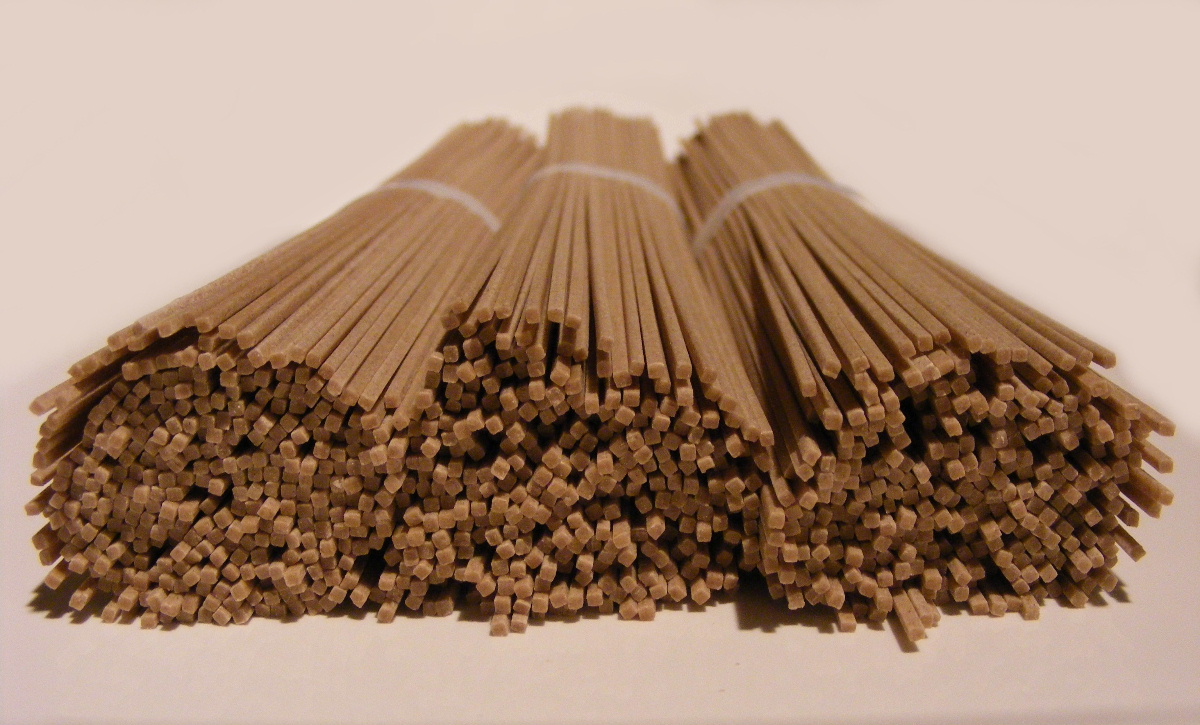
Stir-fried Vegetables and Tofu with Soba Noodles


This is an Asian mash-up. Lemongrass from Thailand, hoisin sauce from China, soba noodles from Japan. You, my dear reader, may be into authenticity but I am not. I look in my fridge, think about other things I've had or seen in recipes, and run with it. I don't believe in overly constraining this cooking thing, especially when I'm trying to clear a bunch of odds and ends out of the fridge.

Though you can use firm tofu straight out of the package, I prefer to use tofu that has been frozen and thawed. Freezing tofu changes its texture, and I like it better then fresh tofu in stir-fries.

For important tips on stir frying, check out this article.

Stir-fried Vegetables and Tofu with Soba Noodles
(serves 4-6)

1 oz. dried shiitake mushrooms
10 oz. soba (Japanese buckwheat) noodles
12 oz. firm tofu (preferably frozen and thawed), cut into 1" cubes
4 Tablespoons vegetable oil (peanut and sunflower are my favorites)
3 large cloves garlic, minced
6 scallions, cut into 1" pieces
¼ teaspoon dried lemongrass
1 large carrot, cut in half lengthwise, and thinly sliced
2 large plum tomatoes, cubed
3 cups snow peas or green beans
6 Tablespoons hoisin sauce
3 Tablespoons low-sodium soy sauce
1 teaspoon cornstarch dissolved in 1 Tablespoon cold water
½ teaspoon black pepper

Before you begin slicing and dicing, rehydrate the dried mushrooms: Cover the mushrooms with boiling water and let sit as you do the prep on all the veggies. When the mushrooms are rehydrated, remove the tough stem and slice the caps.

If using green beans, cut into 1" pieces.

Dry off the tofu, gently pressing out the moisture.

Bring a large pot of salted water to a boil for the noodles.

Heat 2 Tablespoons of oil in a large skillet or wok over high heat. Stir fry the tofu until lightly golden. Remove from wok with a slotted spoon and set aside.

Add the remaining oil to the wok. Add the scallions and dried lemongrass. Cook until garlic is fragrant. Add sliced carrot. Stir fry for about 3 minutes. Add snow peas/green beans. Continue cooking for another 4 minutes, stirring frequently. While the beans are cooking, get the noodles in the boiling water. They take about 4 minutes to cook. Do not overcook.

Drain the noodles in a strainer and set aside. Add the hoisin sauce and soy sauce to the veggies. Stir to combine. Add in the fried tofu and the noodles. Toss to combine. Make a well in the center to expose the liquid at the bottom of the wok. Add the slurry of cornstarch and bring to a boil, stirring. This will thicken the sauce slightly, helping it to stick to the noodles. Season generously with black pepper and serve hot.

Good as a leftover though the noodles will have a softer texture after reheating.

Photo credit: By FotoosVanRobin (Flickr) [CC BY-SA 2.0 (http://creativecommons.org/licenses/by-sa/2.0)], via Wikimedia Commons

Followers