New Location

You can find all the old content and new stuff too at worldplatterblog.wordpress.com
Showing posts with label Asian. Show all posts

Friday, April 1, 2016

Indonesian Beef with Onions


Another recipe adapted from the fantastic (and long out-of-print) The Good Cook series of cookbooks from Time-Life.

I used Thai Black Sweet Soy. Indonesian sweet soy sauce, called kecap manis, is also a sweet soy. I won't say they are interchangeable, but Thai sweet soy also results in a very tasty dish. Use what you have, is my motto!

Indonesian Beef with Onions
(serves 4)

1 pound top round steak, thinly sliced

Marinade
1 large onion, cut into chunks
3 large cloves garlic
3 Tablespoons kecap manis or Thai sweet soy sauce
10 peppercorns, crushed
3 Tablespoons sweet soy
pinch of ground nutmeg

1 Tablespoon oil
1 large onion
1 14 oz. can diced tomatoes, including liquid
1 stick of cinnamon
2 whole cloves

Pulverize the onion and garlic in a food processor. Place in a bowl and mix in the remaining marinade ingredients. Add the sliced beef and toss to coat. Set in the fridge to marinate for 30 minutes to an hour. Drain the beef, reserving the marinade.

Heat the oil in a wok over medium-high heat. Cook onions until they start to wilt. Increase heat to high. Add the beef and stirfry for a couple of minutes. Add the marinade and the rest of the ingredients. Reduce heat to medium. Cook until sauce thickens, about 5 minutes. Serve over rice. Try not to eat the cloves, but if you do bite into one of them, it won't kill you.

Adapted from The Good Cook: Beef & Veal, Time-Life Books, 1978.

Photo credit: By Jdmtdktdht (Own work) [CC BY-SA 3.0 (http://creativecommons.org/licenses/by-sa/3.0)], via Wikimedia Commons

Monday, September 21, 2015

Stir-fried Vegetables and Tofu with Soba Noodles


This is an Asian mash-up. Lemongrass from Thailand, hoisin sauce from China, soba noodles from Japan. You, my dear reader, may be into authenticity but I am not. I look in my fridge, think about other things I've had or seen in recipes, and run with it. I don't believe in overly constraining this cooking thing, especially when I'm trying to clear a bunch of odds and ends out of the fridge.

Though you can use firm tofu straight out of the package, I prefer to use tofu that has been frozen and thawed. Freezing tofu changes its texture, and I like it better then fresh tofu in stir-fries.

For important tips on stir frying, check out this article.

Stir-fried Vegetables and Tofu with Soba Noodles
(serves 4-6)

1 oz. dried shiitake mushrooms
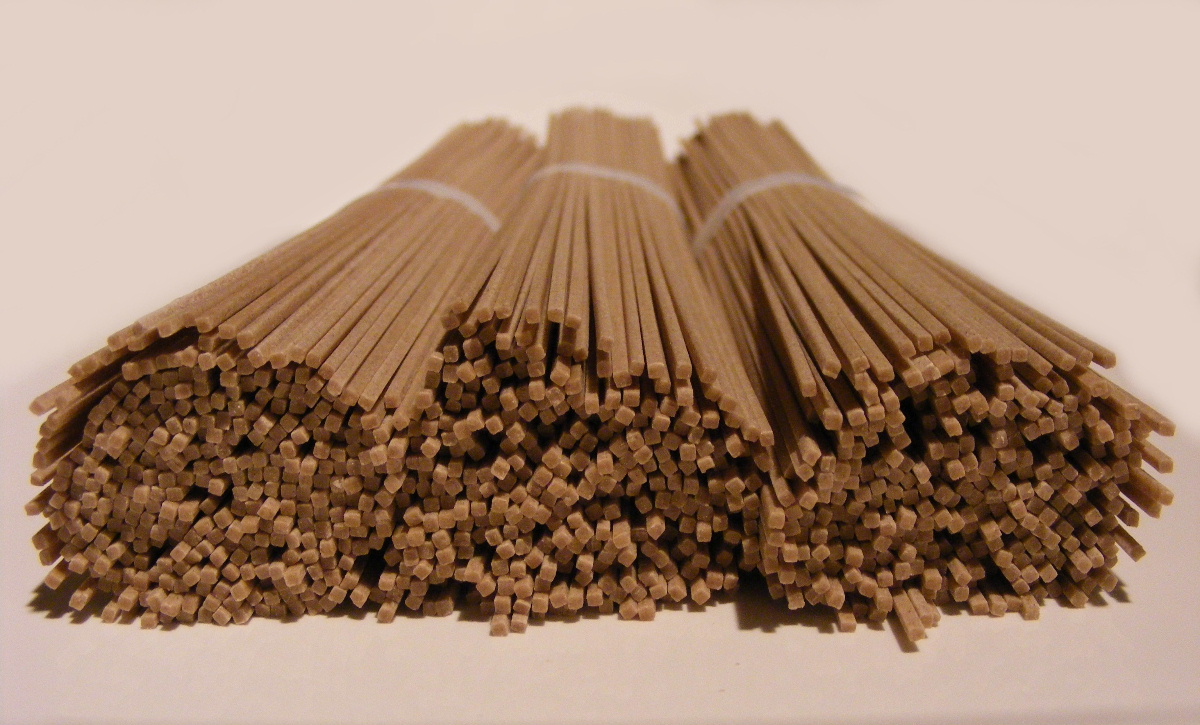
10 oz. soba (Japanese buckwheat) noodles
12 oz. firm tofu (preferably frozen and thawed), cut into 1" cubes
4 Tablespoons vegetable oil (peanut and sunflower are my favorites)
3 large cloves garlic, minced
6 scallions, cut into 1" pieces
¼ teaspoon dried lemongrass
1 large carrot, cut in half lengthwise, and thinly sliced
2 large plum tomatoes, cubed
3 cups snow peas or green beans
6 Tablespoons hoisin sauce
3 Tablespoons low-sodium soy sauce
1 teaspoon cornstarch dissolved in 1 Tablespoon cold water
½ teaspoon black pepper

Before you begin slicing and dicing, rehydrate the dried mushrooms: Cover the mushrooms with boiling water and let sit as you do the prep on all the veggies. When the mushrooms are rehydrated, remove the tough stem and slice the caps.

If using green beans, cut into 1" pieces.

Dry off the tofu, gently pressing out the moisture.

Bring a large pot of salted water to a boil for the noodles.

Heat 2 Tablespoons of oil in a large skillet or wok over high heat. Stir fry the tofu until lightly golden. Remove from wok with a slotted spoon and set aside.

Add the remaining oil to the wok. Add the scallions and dried lemongrass. Cook until garlic is fragrant. Add sliced carrot. Stir fry for about 3 minutes. Add snow peas/green beans. Continue cooking for another 4 minutes, stirring frequently. While the beans are cooking, get the noodles in the boiling water. They take about 4 minutes to cook. Do not overcook.

Drain the noodles in a strainer and set aside. Add the hoisin sauce and soy sauce to the veggies. Stir to combine. Add in the fried tofu and the noodles. Toss to combine. Make a well in the center to expose the liquid at the bottom of the wok. Add the slurry of cornstarch and bring to a boil, stirring. This will thicken the sauce slightly, helping it to stick to the noodles. Season generously with black pepper and serve hot.

Good as a leftover though the noodles will have a softer texture after reheating.

Photo credit: By FotoosVanRobin (Flickr) [CC BY-SA 2.0 (http://creativecommons.org/licenses/by-sa/2.0)], via Wikimedia Commons

Monday, April 21, 2014

Tamarind Sauce

Tamarind pods. The sticky flesh inside is removed and usually sold in a block.

We ate this sauce on lamb chops but I think it would be wonderful on just about anything grilled: chicken, duck, beef, or shrimp (which is what the original recipe from epicurious.com used it on). It is very intense with the tamarind and the fish sauce. It's not so different from many steak sauces or Worcestershire sauce which are flavored with tamarind and anchovies.

I used tamarind sauce from my local Savory Spice Shop but that's not necessary. If you have tamarind pulp - usually sold in a block  - you can make your own sauce. Look for it in Asian markets, especially Indian ones.

Tamarind Sauce
(makes about ½ cup)

1 Tablespoon tamarind pulp
⅓ cup warm water
1 Tablespoon vegetable oil
1 Tablespoon finely minced cilantro
1 Tablespoon minced garlic (3-4 cloves)
1 Tablespoon Siracha sauce
1 ½ Tablespoon turbinado or dark brown sugar
1 Tablespoon fish sauce

Combine tamarind pulp and water in a small bowl. Let sit for 10 minutes to soften pulp, Using your fingers, rub the pulp in the water to dissolve. Tamarind can have lots of fiber and big seeds so don't be surprised if it doesn't all dissolve. Push through a strainer into another bowl to remove the solids. You should have about 3 Tablespoons tamarind sauce.

Heat oil in a small saucepan until hot but not smoking. Add cilantro and garlic. Cook until fragrant, about 30 seconds. Add the rest of the ingredients and simmer until slightly thickened, about 3 minutes. Serve with grilled meat, chicken, or shrimp. It's intense; one recipe is enough for 4 people.

Photo: pictures of the tamarind-fruit {{cc-by}} Clemens PFEIFFER, 1190 Wien, licensed under Creative Commons from WikiCommons

Friday, September 20, 2013

Kimchee Quesadilla


In July, I visited Montreal, Quebec, a wonderful, charming, multi-cultural city north of the border. I wrote about my experience on this blog; go read it if you have plans to visit Montreal (and you definitely should make plans). One of the most fun things I ate while there was a kimchee quesadilla. I saw it advertised on a sign outside of a Korean restaurant near our B&B and I just had to try it. After a long day of exploring the city, I dragged my three friends in, and made them watch while I ate it. Actually, they helped eat it too.

It was quite tasty and very easy, provided you can get kimchee. That's not so very hard. I saw it for sale in a small supermarket in Ithaca, New York recently. If they have it, I bet you can find it almost everywhere now. My kimchee came from Pacific Ocean Marketplace in Broomfield, CO. POM, as we call it, is a supermarket-sized Asian full-service grocery store. They cover nearly all Asian cuisines: Chinese, Thai, Vietnamese, Indian, Japanese, Korean and more. They have locally made kimchee. It's garlicky, and spicy, and not too, too funky. Also rather addictive. It was perfect for my homemade kimchee quesadilla.

Kimchee Quesadilla
(serves 1-2 as an entree, 4 as a snack or appetizer)

Friday, October 5, 2012

Korean-style Short Ribs


Whoa! It's winter. OK, maybe not where you live, but definitely here in Boulder, Colorado. This morning, we woke up to our first snowfall of the season. And, temperatures heading for the mid-20's tonight. Even if it doesn't feel like winter in your neighborhood, it's time to break out the comfort food because the calendar definitely says it's Autumn.

This is a pressure cooker recipe because that is the fastest way to get short ribs on the dinner table. Short ribs have lots of connective tissue that takes quite a while to break down at braising temperature. The pressure cooker accelerates the cooking and you have tender, yummy short ribs in about an hour.

This recipe is adapted from one in Miss Vicki's Big Book of Pressure Cooker Recipes.

Korean-Style Short Ribs with Horseradish Butter
(serves 4)

For the Horseradish Butter:
2 Tablespoons butter, softened
1 Tablespoons prepared horseradish
a pinch of salt

For the Short Ribs:
4 beef short ribs, about 2 pounds of ribs
2 Tablespoons vegetable oil
1 onion, medium dice
½ cup soy sauce
2 carrots, coarsely grated
½ cup water
¼ cup dry sherry
3 Tablespoons toasted sesame oil
¼ cup packed dark brown sugar
2 Tablespoons creamy peanut butter
4 cloves garlic, minced
2 Tablespoons grated ginger
½ teaspoon crushed red pepper flakes
2 Tablespoons sesame seeds, toasted until golden brown
2 green onions, sliced

To prepare the horseradish butter, mix the butter, horseradish, and salt together in a small bowl. Refrigerate for at least 1 hour to allow flavors to meld.

Heat the oil in a pressure cooker over medium heat. Brown the ribs on all sides. Remove to a plate. Add the onions and saute until starting to brown. Deglaze the pressure cooker with the soy sauce, making sure to scrape up the bits stuck to the bottom of the pot. Add the carrots, water, sherry, sesame oil, brown sugar, peanut butter, garlic, ginger, and red pepper flakes. Mix to combine. Add back the short ribs and any juices. Turn the ribs in the sauce. Lock the lid in place, bring up to pressure, and cook for 40 minutes. Remove from heat. Allow to cool until the cooker has depressurized. Remove the lid. The ribs should be very tender at this point. [If not, lock the lid, bring up to pressure and cook 5 more minutes. Again, allow the cooker to depressurize and remove the lid.]

Serve the ribs by placing a rib on a mound of rice. Spoon on some sauce and a ½ Tablespoon of horseradish butter. Garnish with ½ Tablespoon of toasted sesame seeds and the sliced green onions.

These are extremely rich. You can leave out the horseradish butter and they are still rich (and still very tasty). Because they only get better with cooling and reheating, you can make these ahead. Chill in the refrigerator. Before reheating, remove most of the fat that will solidify on top of the sauce. Don't worry; they will still be rich!

Saturday, February 11, 2012

Asian Fish in Papillote

Shiitake mushrooms 1

Cooking fish in papillote - cooking in paper - is a classic French cooking technique. You don't need to use parchment paper. Aluminum foil works fine too. It's a self-contained steaming method, locking in flavors and making clean-up a breeze.

I used whole pompano but I wrote the recipe below to use any white fish fillet, such as sole, striped bass, or snapper. We stopped in a major-league Asian supermarket and they had beautiful pompano for cheap, cheap, cheap. It's a great fish, with white, slightly oily flesh. If you can find it, I recommend it but if you cook them whole, you are in for a little surgery. Their bones are big and there are no pin bones at all, which makes them easier to eat than trout. But, if you don't like dealing with bones, stick to fillets. That said, fillets are perfectly delicious prepared this way.

This recipe grew out of one in Mark Bittman's Fish. His recipe is pretty classic with pine nuts, shallots, and lemon juice. I had also bought some beautiful fresh shiitakes at the Asian mega-mart (again, cheap, cheap, cheap) and wanted to use them. Which led me to an Asian spin on the classic recipe.

My experiment can guide you on your own variations of the classic recipe. Use a different fat, preferably something tasty like butter, good olive oil, even bacon fat. Switch out the mushrooms for another quick cooking vegetable (or julienne it to speed up cooking - good for carrots). Instead of rice vinegar, use another acid such as lemon or lime juice, or another type of vinegar. You get the idea. It's a great way to throw together a tasty fish dish.

Asian Fish in Papillote
(serves 4)

Followers